Client: Salford City Council
Value: £148,000.00
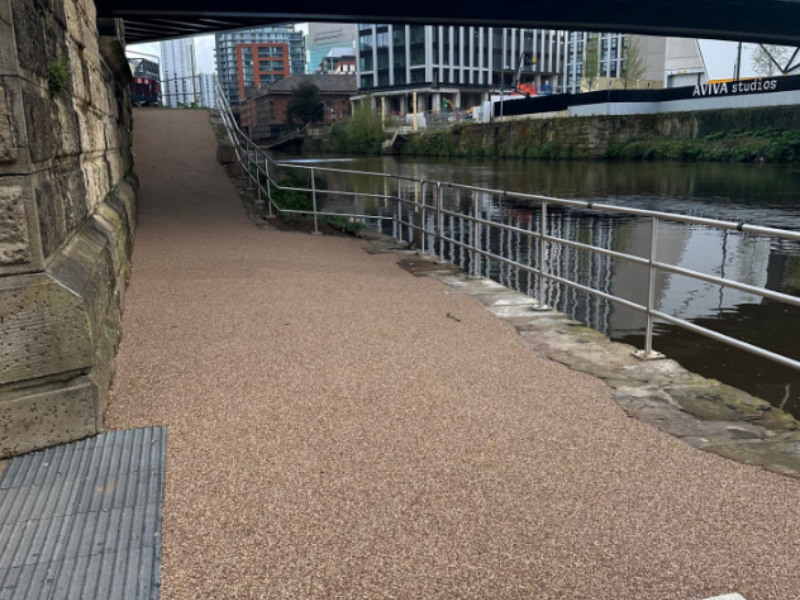
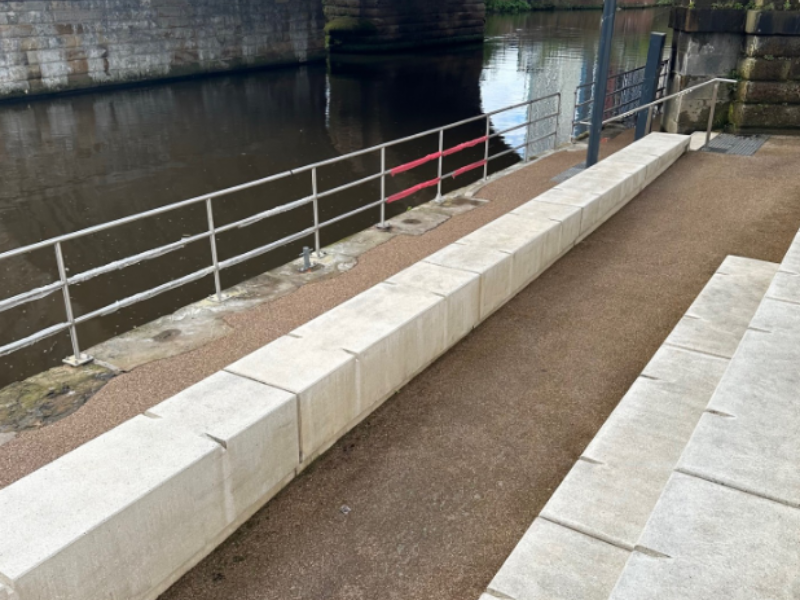
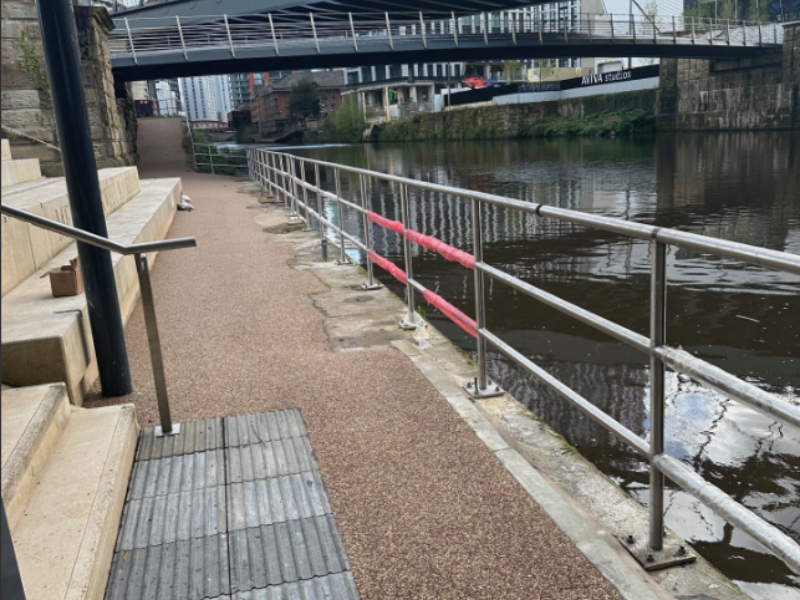
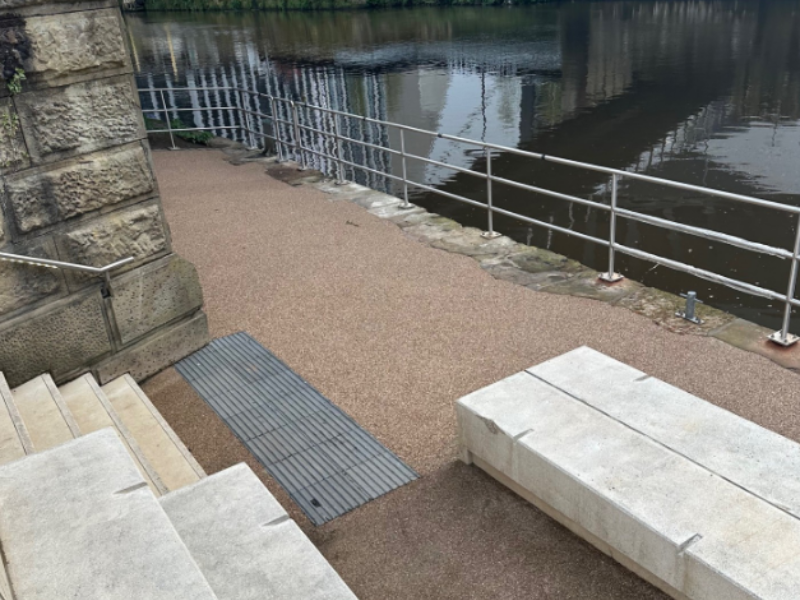
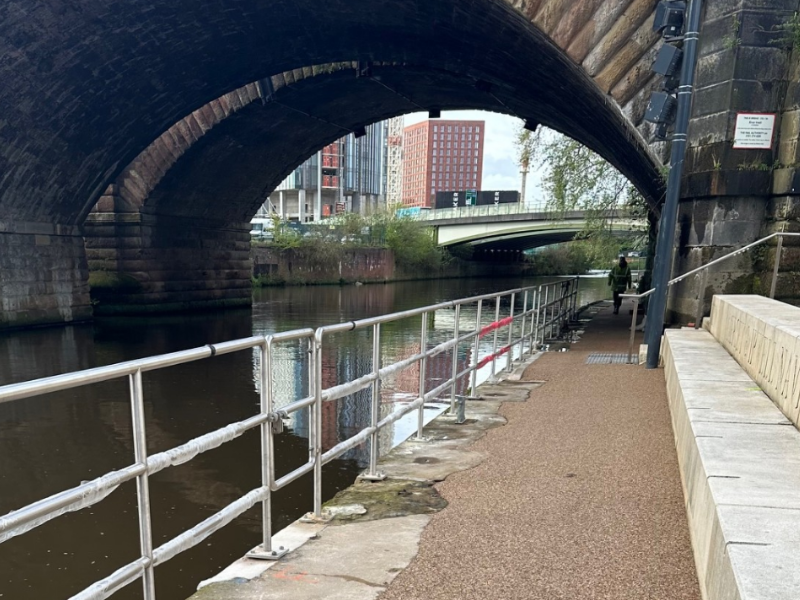
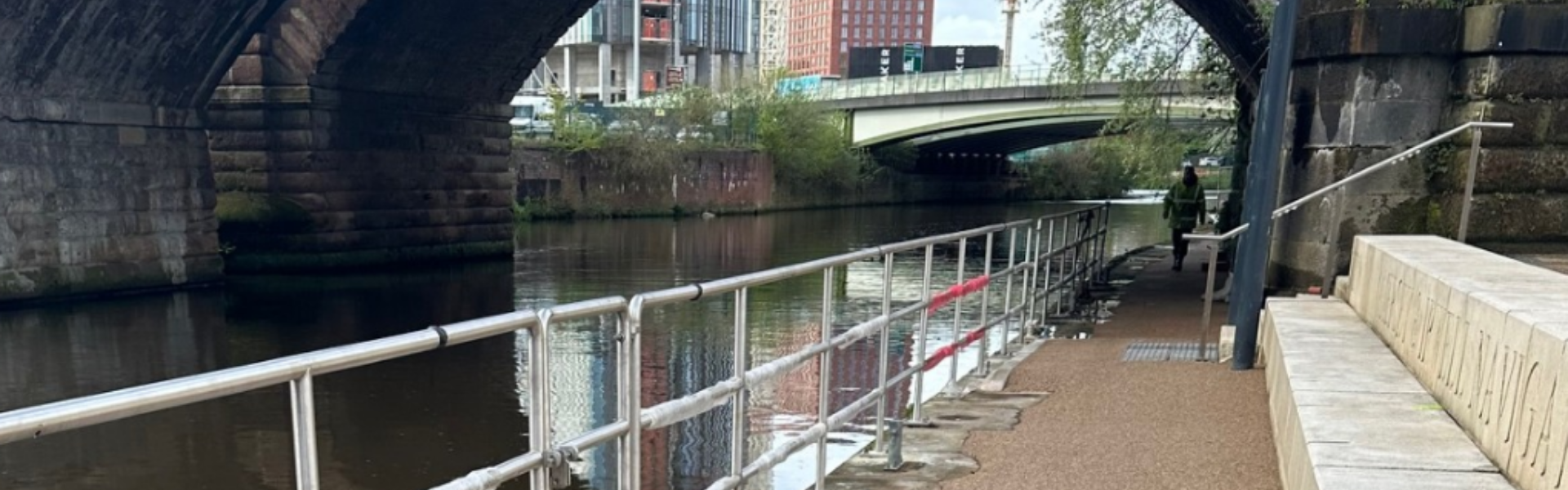
The Ordsall Chord footpath improvement project involved the removal of an existing pedestrian route and the construction of a new, enhanced pathway incorporating a reinforced concrete base, specialist surfacing treatments, illuminated parapet handrails, and associated infrastructure works. Located adjacent to the River Irwell and the River Irwell Bridge, the project presented a number of complex engineering, environmental, and safety challenges that required careful planning, continuous monitoring, and robust risk management throughout the construction programme.
A key aspect of the project was the refurbishment and enhancement of a heavily used riverside route while protecting existing retaining structures and maintaining the integrity of the surrounding environment. Due to the proximity of the works to historic retaining walls and bridge structures, a comprehensive structural monitoring regime was implemented from the outset. Specialist vibration monitoring points were installed throughout the working area and monitored using approved vibration meters and graphical recording equipment. These measures operated alongside a visual monitoring system, ensuring that any movement or structural concerns could be identified immediately. The monitoring strategy was developed in consultation with a qualified structural engineer, with clear thresholds established that would have required works to cease should vibration levels exceed agreed parameters.
Given the sensitivity of the retaining structures, all excavation activities were undertaken by hand rather than using heavy mechanical plant. This approach minimised vibration and loading risks while allowing greater control over excavation works. Excavated materials were transported via wheelbarrow to designated storage areas located away from structurally sensitive zones before being removed from site using carefully selected lightweight plant and equipment.
Working alongside an active watercourse introduced additional complexities and highlighted the importance of comprehensive water safety measures. Construction activities adjacent to the River Irwell required detailed risk assessments, environmental controls, and site-specific methodologies to protect both the workforce and the surrounding environment. Temporary edge protection systems and safety barriers were installed throughout the works to prevent accidental access to the riverbank and reduce the risk of falls into the water. All personnel received dedicated inductions covering water safety procedures, emergency response arrangements, site boundaries, and safe working practices in proximity to the river.
Strict controls were implemented regarding plant movements, material storage, and loading operations. All storage compounds, loading areas, and unloading locations were carefully assessed to ensure they did not impose excessive loads on the footpath structure or retaining walls and were positioned safely away from the watercourse. Height and width restrictors were installed at access points to prevent larger or heavier plant from entering restricted areas and potentially compromising structural stability.
The scope of works included site clearance, removal of scrub and self-seeded vegetation, cleaning of existing brickwork, excavation of existing path surfaces, installation of electrical ducting and associated connections, placement of geotextile membranes, importation of granular sub-base materials, installation of steel dowels, construction of reinforced concrete slabs, bituminous surfacing, resin-bound stone finishes, seating elements, illuminated safety railings, lighting installations, feeder pillar connections, and full reinstatement works.
The completed project has delivered a safe, durable, and visually appealing riverside footpath that significantly enhances pedestrian access and user experience. Through meticulous structural monitoring, rigorous water safety management, and environmentally responsible construction practices, the scheme was successfully completed while safeguarding both the surrounding infrastructure and the adjacent River Irwell environment.