Client: Elswick Parish Council
Value: £127,000.00
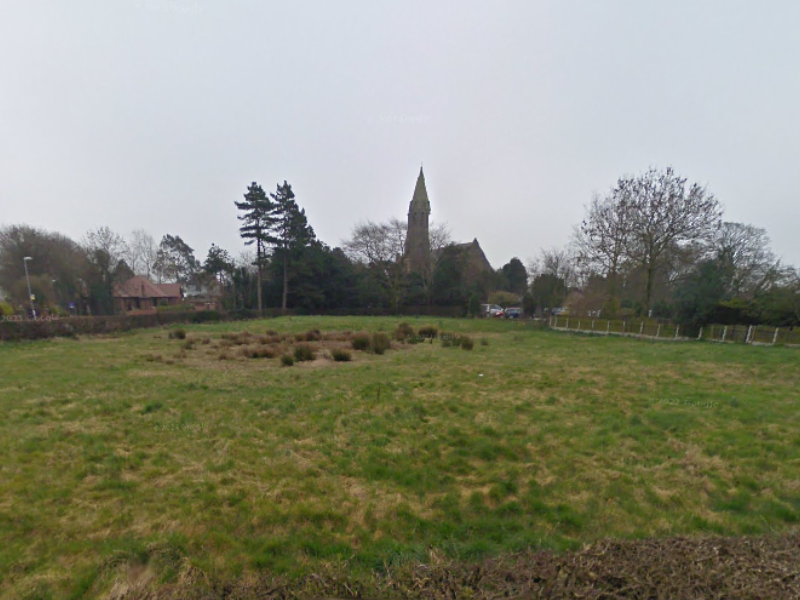
The land reclamation scheme at Elswick transformed a previously underutilised agricultural field into a multifunctional village green, delivering significant environmental and biodiversity benefits for the local community. From the outset, careful consideration was given to minimising the impact of construction activities on nearby residents and the surrounding rural environment. The client was particularly conscious of reducing noise, limiting heavy vehicle movements along narrow village roads, and maximising the reuse of existing site materials to support sustainable construction practices.
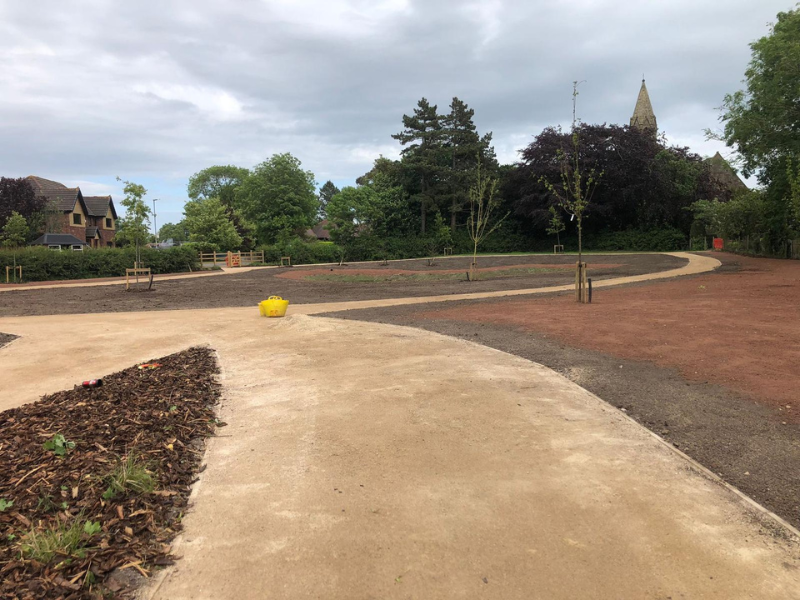
The project commenced with the removal of existing vegetation, which was cut and baled by a local agricultural contractor for beneficial reuse. Following site clearance, the entire area underwent extensive reprofiling to create the desired landform and drainage characteristics. Existing topsoil and subsoil materials were carefully stripped and stockpiled within designated areas, with strict segregation measures implemented to prevent cross-contamination and preserve soil quality. Stockpiles were strategically positioned away from access routes, residential boundaries, and established hedgerows to minimise disturbance and protect existing ecological features.
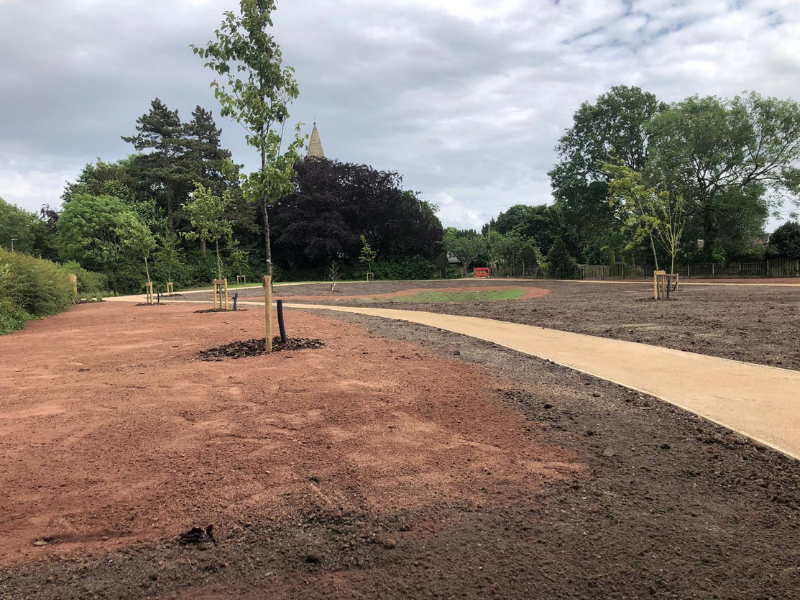
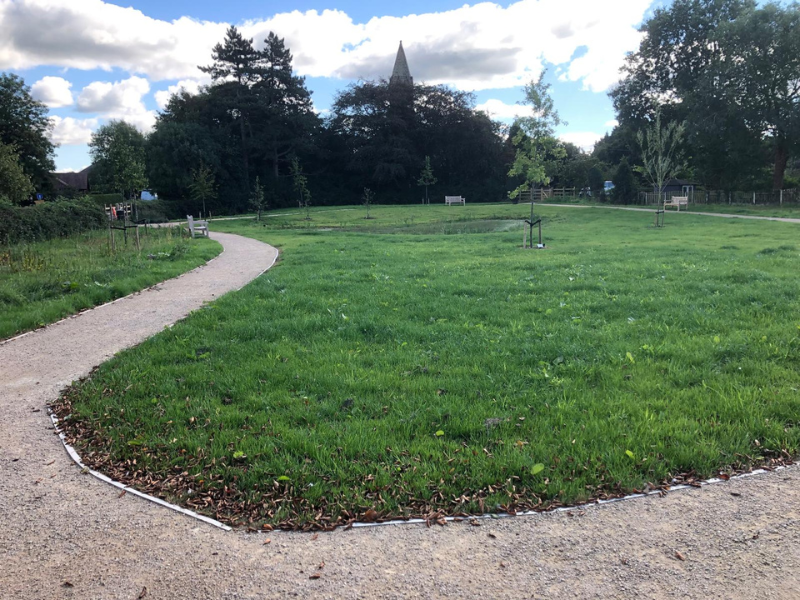
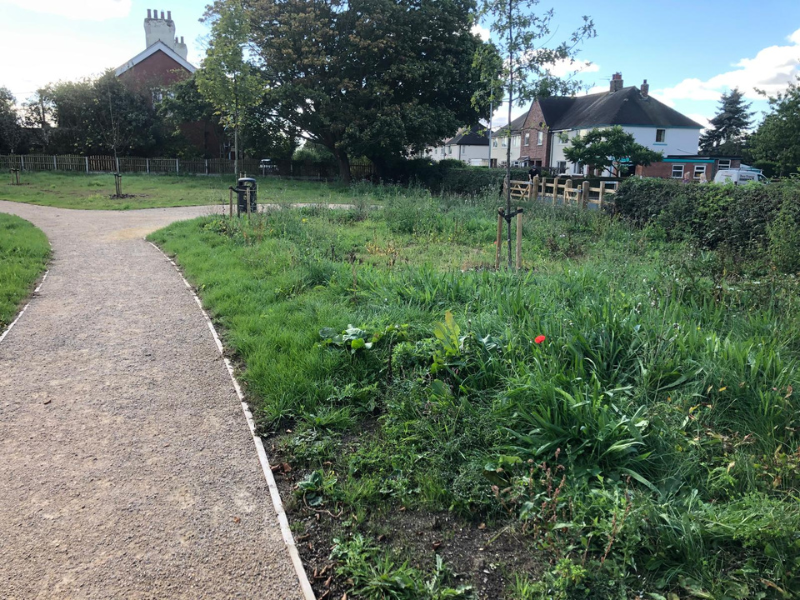
A key objective of the scheme was the creation of species-rich wildflower grassland areas to enhance biodiversity and provide valuable habitat for pollinating insects and other wildlife. To achieve this, a combination of site-won and imported materials was used to create suitable growing conditions. Existing topsoils were improved using soil conditioners where appropriate, while specially blended low-nutrient topsoils were imported for the dedicated wildflower areas. The use of low-fertility soils is critical to the successful establishment of wildflower meadows, as it reduces competition from vigorous grasses and allows a diverse range of native wildflower species to thrive. These areas were specifically designed to increase ecological value, improve visual amenity, and support local biodiversity over the long term.
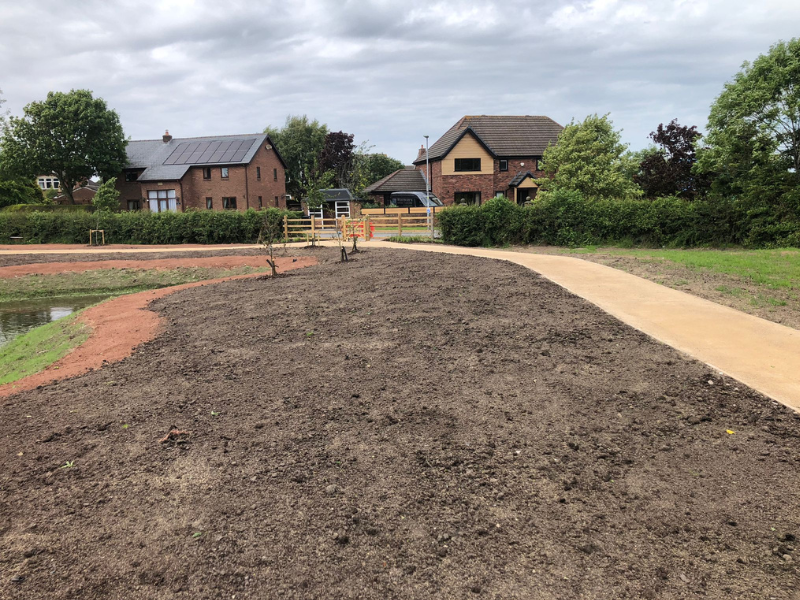
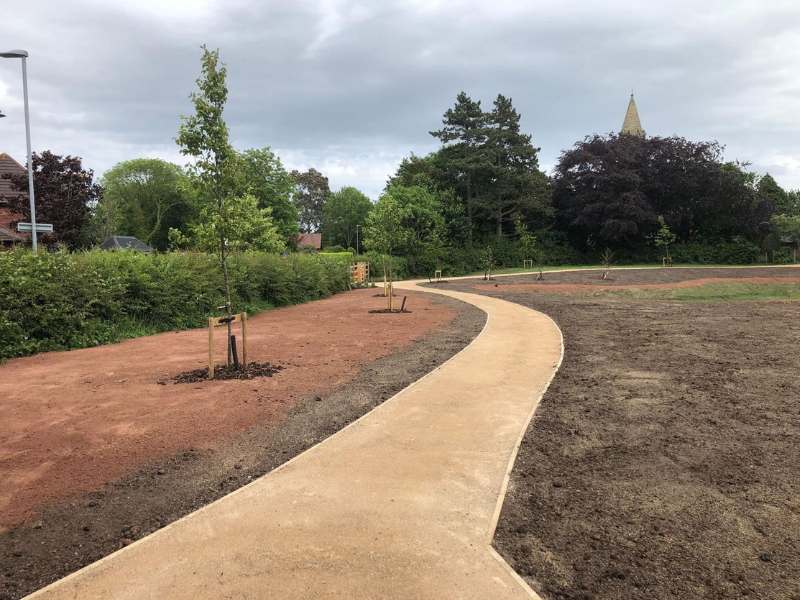
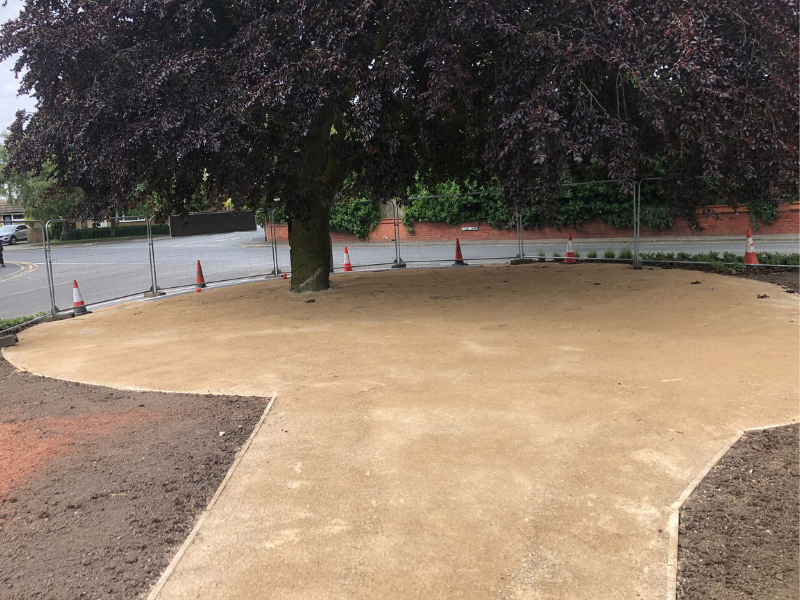
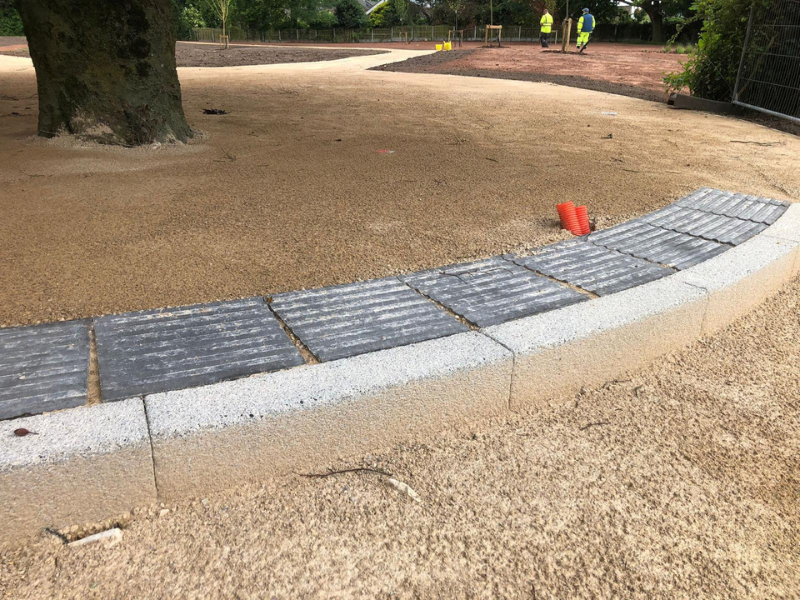
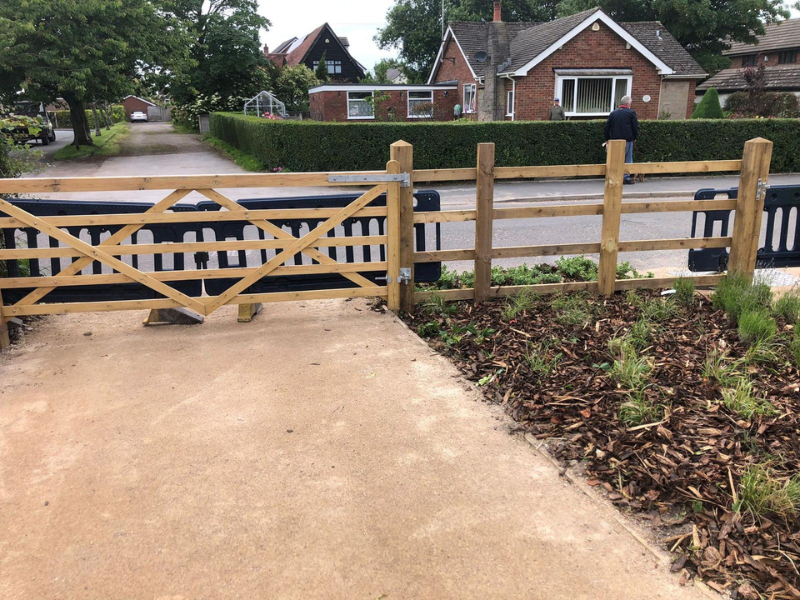
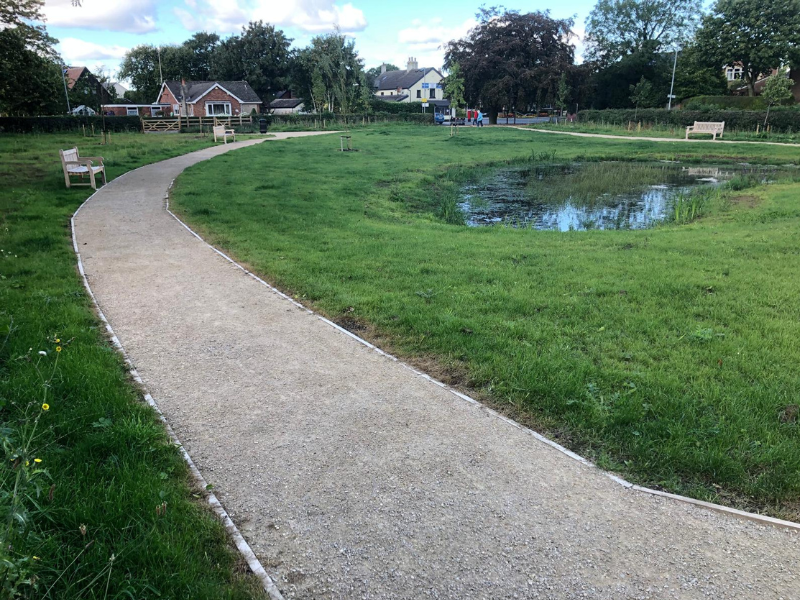
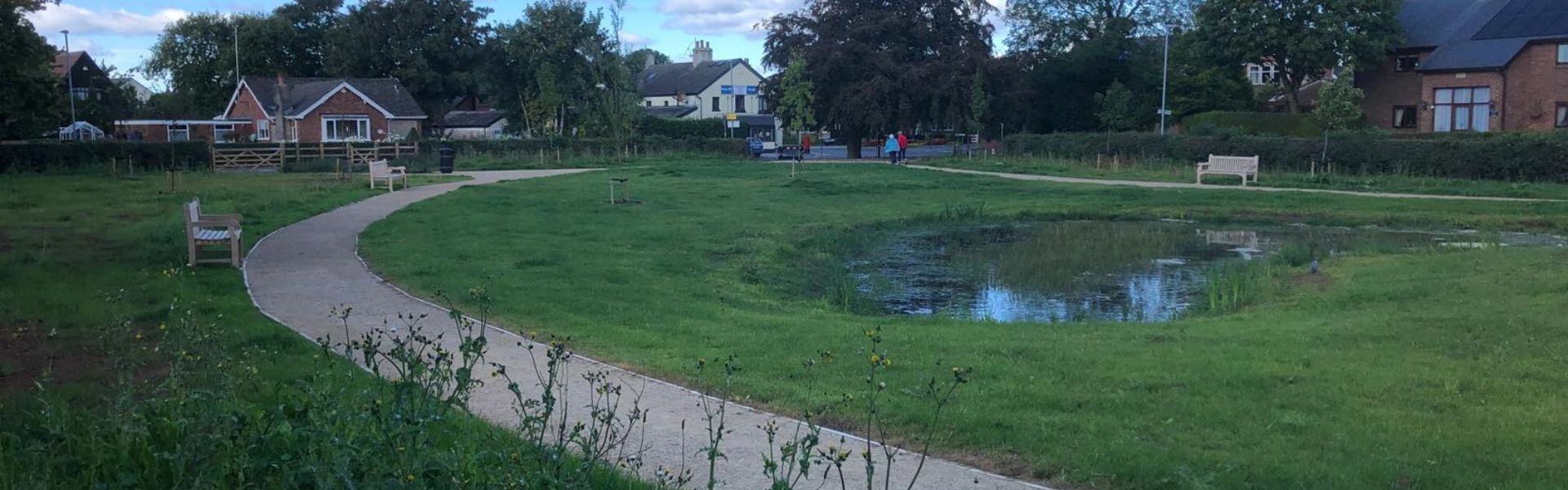
The scheme also included the construction of accessible footpaths using locally sourced crushed aggregate finished with self-binding gravel. The paths were designed with smooth gradients and appropriate crossfalls to provide year-round accessibility while ensuring effective surface water drainage. Care was taken during construction to avoid damage to existing tree roots and retained vegetation wherever possible.
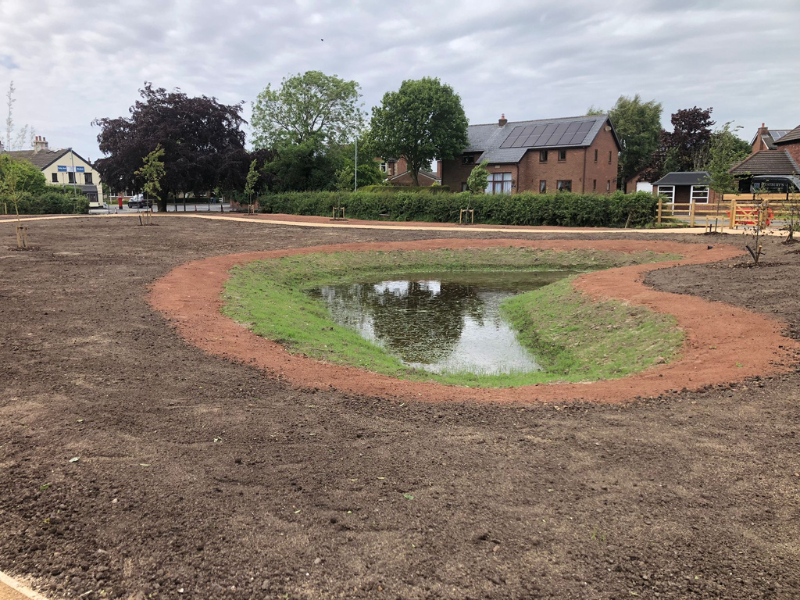
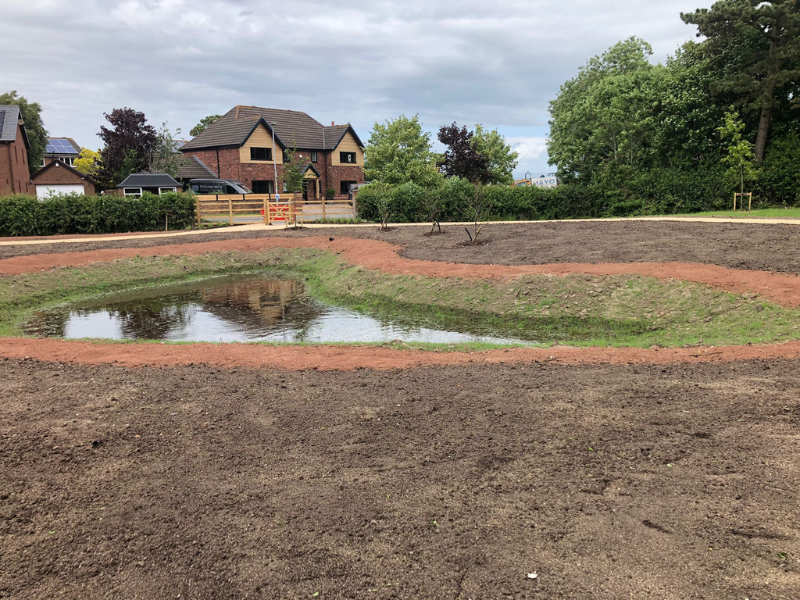
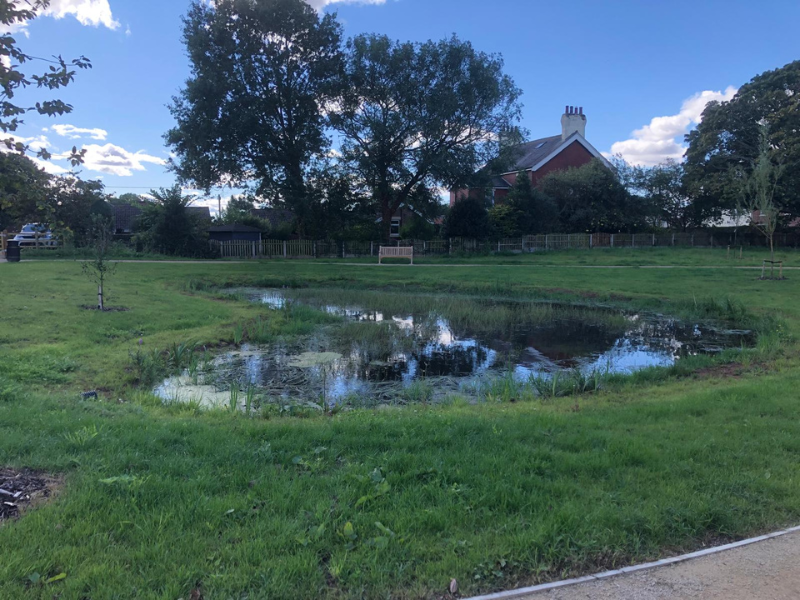
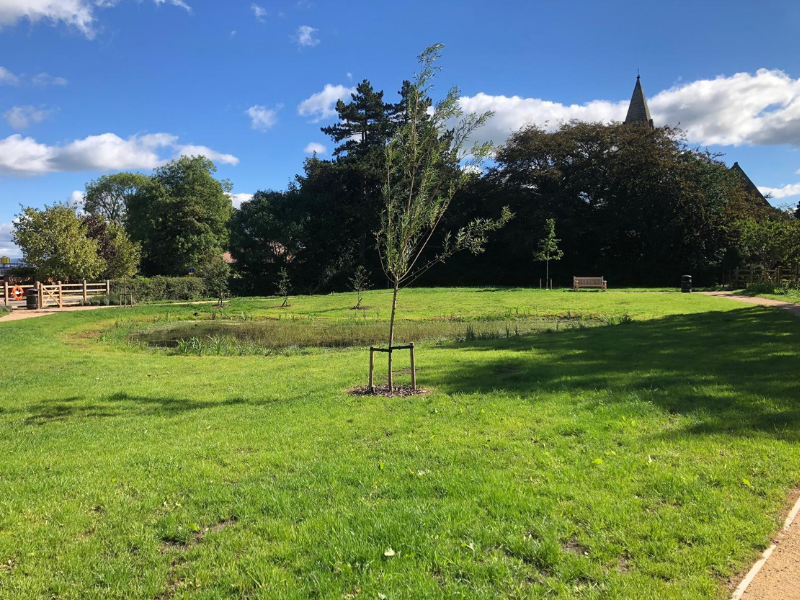
A significant ecological feature of the project was the creation of a new wildlife pond designed to support a wide range of aquatic and terrestrial species. The pond was lined using Bentotex, a sodium bentonite clay liner system contained between woven and non-woven geotextiles, providing a robust and environmentally sensitive solution. The pond profile was carefully designed to capture and retain surface water runoff from surrounding areas while incorporating varying depths and marginal zones to encourage diverse habitats. An overflow system was also included, directing excess water into an attenuation feature before discharging into the wider drainage network.
The completed scheme has successfully created a valuable green space that combines recreation, habitat creation, and environmental enhancement, delivering lasting biodiversity benefits through the establishment of species-rich wildflower areas and a thriving wildlife pond ecosystem.